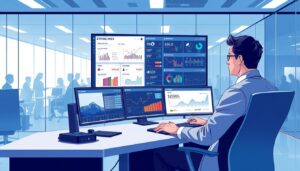
Forget the old, dusty rulebook. Live betting is not just watching from the sidelines. It’s a fast-paced game where everything changes in real-time. The rules are made up as the game goes on.
We’re not just tracking scores. We’re dealing with chaos. A red card in the 89th minute is a big deal. It changes real-time odds fast. A star player getting hurt is not just an injury. It affects every prediction instantly.
This isn’t about guessing who will score next. It’s about understanding the game’s inner workings. The in-play market is complex and always changing. Your strategy needs to keep up with the data storm. It’s about seeing the goal and understanding the cascade of probability behind it.
It’s like chaos theory in action. A goalkeeper’s cramp, a sudden rain, or a disputed call are not just events. They are key data points in the live betting world. We’re not just watching. We’re analyzing the market’s mood, data speed, and probability all at once.
Latency Budgets and Data Source Hierarchies
In the fast-paced world of in-play trading, every millisecond counts. A 200 millisecond delay can mean the difference between winning big and losing everything. We’re not just fighting against time; we’re managing it carefully. Every millisecond is valuable, and each data source has its own cost.
This isn’t about having the fastest internet. It’s about using data wisely. We organize our data like a highway with different lanes. Data packets are prioritized based on speed and reliability, not just size.
The Golden Source: Primary Data Feeds
Primary feeds are like 24-hour news networks for trading. They’re the first to report but come at a high cost. These feeds offer the lowest latency and highest integrity. They’re the ‘golden source’ for a reason.
Direct API feeds from leagues and official providers are included here. The latency protection is top-notch. You’re paying for the data and the 2-5 millisecond advantage it gives you.
The Safety Net: Secondary & Tertiary Feeds
Secondary feeds are like marathon runners. They’re robust and slightly slower than primary feeds. Think of major sports broadcasters or aggregators here. They offer a redundancy check.
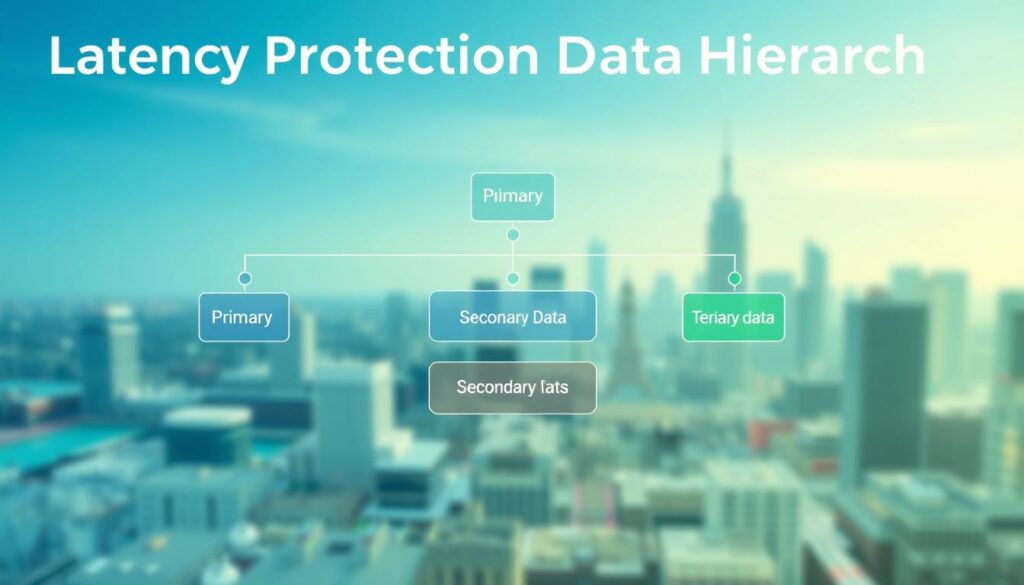
Tertiary feeds are the social and optical sources. They include social media and AI analyzing broadcast feeds. They’re the early warning system.
Building the Hierarchical Filter
This three-tiered approach creates a verification waterfall. The system listens on multiple channels. If there’s a discrepancy, it triggers a fraud check.
It’s like having multiple witnesses confirm an event. Only when all three tiers agree do we consider it confirmed for trading.
| Tier | Data Source | Typical Latency | Cost Tier | Primary Use Case |
|---|---|---|---|---|
| Primary | Official League/Data Partner Feeds | 0-100ms | High | Pricing, Core Execution |
| Secondary | Broadcast & Major Aggregators | 100-500ms | Medium | Verification, Redundancy |
| Tertiary | Social, Optical AI, Public Feeds | 1-5 seconds | Low | Early Warning, Sentiment |
The table above is our battle plan. Each tier has a cost in dollars and milliseconds. The latency protection isn’t just about speed. It’s about having the right hierarchy for reliability.
This model speeds up trades and makes our system more resilient. When a goal is scored, we see it through multiple lenses. This creates a more accurate picture of reality than any single source.
Auto-Suspend Triggers: The Paranoia That Saves Your Bankroll
Think of in-play betting as a high-stakes poker game. The dealer can change the rules, and a player can get injured. Your edge isn’t just about speed; it’s about knowing when to fold before you even see the next card. The auto-suspend function is like a circuit breaker that prevents a short circuit. It’s not a failure; it’s a strategic retreat.
We’re not just building a system that reacts; we’re building one that pre-empts disaster.
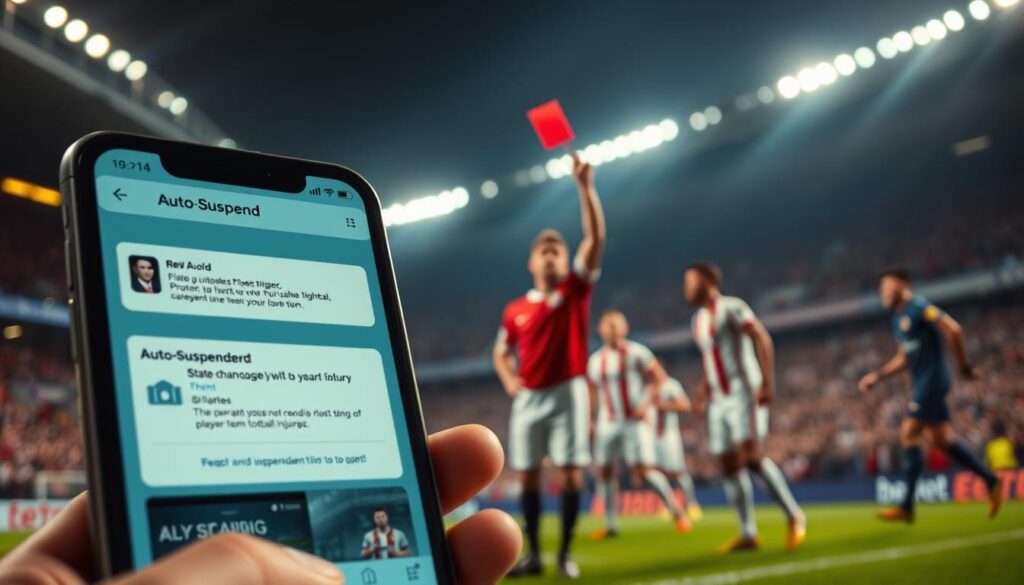
Forget simple if-then statements. A robust auto-suspend system is a paranoid, multi-layered guardian. It doesn’t just look for a single red flag; it weighs a confluence of factors. It decides in milliseconds whether to slam the brakes on the entire market.
It’s the ultimate expression of the Sage’s wisdom: knowing what you don’t know is more valuable than all the data you have.
1. The State Change: More Than Just the Scoreboard
A goal isn’t just a goal. A red card isn’t just a sending-off. They are seismic state changes that fracture the current market reality. A well-tuned auto-suspend doesn’t just react to the event; it reacts to the market’s reaction to the event.
The trigger isn’t “goal scored,” but the cascade of bet placement anomalies, odds volatility, and volume spikes that follow. The system must distinguish between a market adjusting and a market in freefall.
2. The Red Card Rule: Anticipating the Chaos Cascade
A red card is the ultimate volatility bomb. But a sophisticated model doesn’t just see “red card.” It sees: minute 65, star defender, away team, one-goal lead. The auto-suspend logic here is weighted.
A red card to a goalkeeper in the 20th minute is a system-stopping event. The same card for a substitute in the 89th minute might only trigger a volatility alert. The system isn’t asking “Was there a red card?” but “Given the context, does this red card invalidate all open bets and current odds?”
3. The Injury Wildcard: When a Player Becomes a Liability
Injuries are the ultimate asymmetric information event. The public sees a player go down. Our auto-suspend logic sees a cascading probability tree.
A key quarterback’s knee buckling isn’t just a play; it’s a complete recalibration of the win probability. The smart trigger here isn’t just “player leaves field.” It’s a model that factors in Player Impact Score, time remaining, substitution quality, and the pre-injury money flow.
The auto-suspend must fire before the replacement QB takes a snap, not after the odds have already collapsed.
Trigger Logic Matrix
| Trigger Event | Simple Logic (Binary) | Advanced Logic (Weighted Model) | Typical System Response |
|---|---|---|---|
| Goal Scored | Suspend all markets for 30s. | Analyze goal importance (equalizer? winner?), time remaining, and pre-goal odds movement to adjust suspension length. | Brief (3-5 sec) pause on match odds; longer pause for correct score markets. |
| Red Card | Suspend match odds for 60 seconds. | Weighted trigger: minute of game, player sent off, scoreline, and pre-card odds. May only suspend specific markets (Next Goal). | Variable. May suspend only “To Win” and “Over/Under” for 60s, leaving Correct Score open. |
| Key Player Injury | No auto-suspend. Manual trade review. | Model calculates Player Impact Score. If above threshold, triggers 30-90 sec auto-suspend on all markets. | Market suspension followed by rapid odds recalibration across all related markets. |
| Odds Spike/Anomaly | Flag for review. | Algorithm detects abnormal volume/price movement vs. model, triggers 10-sec auto-suspend for investigation. | Micro-pauses (5-10 sec) to kill possible cross-market arbs or erroneous bets. |
Implementing a robust auto-suspend protocol isn’t about fearing the chaos. It’s about having a disciplined, pre-programmed response to it. It’s the difference between a trader who freezes when the market crashes and one who has a clear, emotionless protocol for when to sell.
In the high-frequency world of in-play betting, the auto-suspend isn’t a panic button. It’s the calm, logical, and utterly paranoid guardian of your margin.
Price Guardrails and Reject Logic
Price guardrails are like the safety features in a car. They help keep the trading engine safe. They’re not just speed limits; they’re smart boundaries that adjust to the market’s changes. They’re the backbone of risk management, not just a defense.
A price guardrail is more like a force field than a wall. It doesn’t just block; it thinks. It checks if a bet is wise right now. It looks at the bet’s size, speed, and how it fits with the system’s other parts. This is the smart, careful work of reject logic.
The first defense is the fat-finger guard. It stops big mistakes, like a huge bet on a small event. It knows what’s normal for each market. If a bet is way too big, it’s rejected right away.
Then, there’s the velocity check. It stops fast, unfair bets. If a bet changes too quickly, it’s not a good bet. It’s a sign of trouble, and the system acts fast.
The top layer is the correlation logic. It looks at how different bets relate to each other. It catches smart bets that try to make money off tiny price differences. If it spots a pattern that looks like cheating, it stops all bets in that group.
This is the hidden side of betting. Every rejected bet might upset a customer, but it keeps the system fair. The price guardrails are smart, always watching, and keeping the house smart and safe.
Trader Intervention Protocols
Alarm bells are ringing. Auto-suspend triggers have fired, and price guardrails are flashing red. A klaxon only you can hear is blaring in your skull. This is not a drill. The machine has hit a logical paradox, a market anomaly, or a data stream has just gone dark.
This is the moment the trader intervention protocols take over. It’s the human-in-the-loop moment. The cold logic of the algorithm meets the warm, messy, intuitive gut of the human trader.
Our system isn’t designed to be a black box that spits out trades. It’s a co-pilot. When the automated systems signal an anomaly, they don’t just stop. They scream for a human.
The protocol isn’t just a set of instructions. It’s a battle-tested escalation matrix for when the silicon meets the road.
The first and most critical rule of the protocol is the handover protocol. The system doesn’t just dump a problem in your lap. It hands you a narrative.
The trader’s dashboard doesn’t just show a red flag. It presents a contextual snapshot. You see the precise trigger and the state of the auto-suspend. It displays the last 30 seconds of the order book and a direct link to the raw data feed that caused the alert.
This is where gut instinct meets data. The trader’s first move isn’t to panic or to blindly trust the machine. It’s to diagnose. The protocol is a checklist, a pilot’s pre-flight for a market storm.
- Triage: Is this a data feed error, a fat-fingered order from a human at another desk, or genuine market-moving news? The dashboard cross-references with other data sources—news sentiment, social media chatter, even the SEC’s EDGAR system for a sudden 8-K filing—to see if the machine missed a legitimate catalyst.
- Contextual Investigation: The protocol mandates checking the “why.” Was there a news headline? A major trade in a correlated asset? The trader uses the system’s tools to replay the 60 seconds leading up to the trigger, examining the order flow and the state of the market depth.
- Action or Override: This is the decision point. The trader can confirm the machine’s caution and keep the suspension, or, if they deem the alert a false positive, they can manually override and resume automated trading. This isn’t a binary on/switch; it’s a judgment call, backed by the full context the model can provide.
Our dashboard is the command center for this. Think of it less like a Bloomberg terminal and more like the cockpit of a jet. You have primary instruments (the anomaly alert), secondary systems (correlated asset prices, news tickers), and the “override panel”—a clear, one-click interface to resume, adjust, or completely halt the automated strategy.
Lastly, the protocol demands a post-mortem. Every intervention is logged, analyzed, and fed back into the model. Why did the guardrail trigger? Was it a one-off glitch or a new market behavior? This feedback loop, as outlined in the Federal Reserve’s guidance on sound trading practices, is what transforms a simple alert system into a learning, evolving intelligence. You can explore the foundational principles of sound trading oversight in resources like the Federal Reserve’s Trading and Capital-Markets Activities.
The goal isn’t to replace the trader with an algorithm, or the algorithm with a trader. The goal is a symbiosis. The machine handles the millisecond reactions and the brute-force calculations of risk. The human provides the strategic oversight, the understanding of “market feel,” and the ethical and strategic oversight that a pure algorithm lacks. It’s a partnership, where the protocol is the rulebook that keeps both partners in sync, ensuring that when the klaxon sounds, the response isn’t panic, but a calm, informed, and decisive protocol.
KPI Review Deck
The KPI Review Deck isn’t just a celebration. It’s a deep dive into what went wrong. We look at more than just the profit and loss. We analyze every move, every decision.
We’re not just checking if we won or lost. We’re studying the Mean Time to Suspend (MTTS) and how well our auto-suspend triggers work. We figure out if a mistake cost us or if we missed something important.
This isn’t about pointing fingers. It’s about learning from mistakes. We compare trader actions with system logs. This helps us test our threat model under real-world stress. It makes our risk models more realistic and effective.
This is how a trading desk becomes proactive. The KPI Review Deck is more than a report. It’s a way to improve our system for the future. It helps us avoid the same mistakes and stay ahead of new challenges.